
Air conditioning maintenance pays for itself in lower bills and fewer breakdowns, and when you schedule it matters almost as much as whether you do. After months of long run times, filters, coils, and refrigerant levels have all taken wear, and small problems grow quietly until they surface as a failure. Here is when to book, what a proper tune-up covers, and how to tell if your system needs more than a checkup.
If you already know your AC is due, you can schedule air conditioning maintenance with Pacific Air Comfort, and we will get you taken care of.
When to Schedule Air Conditioning Maintenance in Roseburg
Once a year, the end of the cooling season is the smartest window. Right now, in late summer, your system has just finished its hardest months: technicians can see exactly how it performed under real load, and you avoid the spring rush when appointment books fill up fast. A tune-up in this window means worn parts get replaced while the weather is still mild enough that a day without cooling is an inconvenience, not an emergency. If you missed the late-summer window, early spring before the first heat wave is the next-strongest choice.
There is a financial angle too. Pacific Power residential rates rose about 3 percent this April (more than 10% over the past year), over 4 dollars a month for the average home, with a further increase already requested, and a system running with dirty coils or a clogged filter uses noticeably more electricity to deliver the same cooling. An end-of-season tune-up restores that lost efficiency for the remaining hot days and for the first stretch of next summer.
Waiting has a hidden cost as well. Problems that start in August, such as a weak capacitor or a small refrigerant leak, sit unaddressed all winter. By the time you switch the system back on in May, a cheap fix has often become an expensive repair.
What Does an Air Conditioning Service Visit Actually Include?
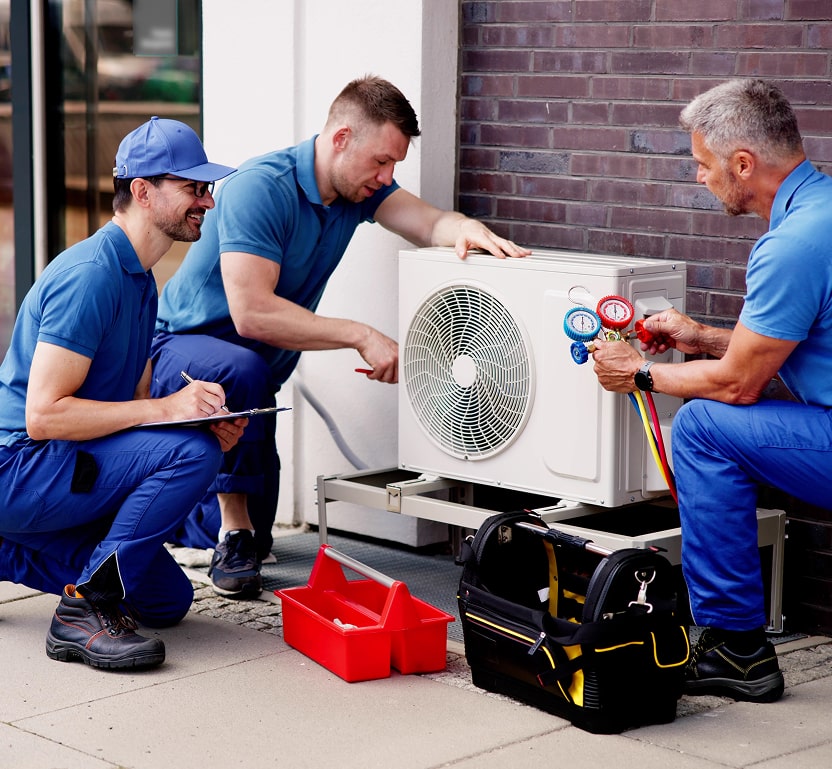
A professional air conditioning service visit covers cleaning, testing, and adjustment of every major component: the technician cleans the condenser and evaporator coils, replaces or cleans the filter, checks refrigerant charge, tests electrical connections and capacitors, clears the condensate drain, and verifies the thermostat is reading accurately. Each item targets a specific failure that shows up after a long cooling season.
Here is what the core checklist accomplishes for your system:
– Coil cleaning: Dirty coils force the system to run longer for the same cooling. Cleaning them restores capacity and lowers energy use.
– Filter replacement: A clogged filter chokes airflow, strains the blower motor, and pushes dust back into your rooms.
– Refrigerant check: Low charge usually means a leak. Catching it early protects the compressor, the most expensive part in the system.
– Electrical testing: Capacitors and contactors wear out from summer heat. Testing them now prevents the classic first-hot-day failure next year.
– Condensate drain clearing: A blocked drain causes water damage and shutdowns. Clearing it is quick during a tune-up and messy after a backup.
The Real Cost of Skipping Maintenance
Skipping maintenance costs money in three ways: higher monthly bills from lost efficiency, earlier full-system replacement because components wear faster, and repair calls that could have been prevented for a fraction of the price. With electricity rates rising again this year, the math has only gotten sharper.
There is also a 2026-specific reason to stay ahead of repairs. The industry has made a refrigerant transition, moving away from R-410A toward newer low-impact refrigerants. Repairs on older systems that involve refrigerant can cost more than they used to as the older supply tightens. Regular maintenance reduces the odds of the kind of leak or compressor failure that forces that expensive decision, and it gives you time to plan a new AC installation on your schedule instead of during a heat wave.
If your system is aging, a tune-up visit is also the right moment to ask the technician honestly where it stands. A well-maintained unit can run for years past the average, and a struggling one is better replaced in the fall shoulder season than in July.
Tune-Up or Repair: How to Tell the Difference
A tune-up resolves weak cooling when the cause is dirt, airflow, or minor adjustment, which covers a surprising share of complaints. If the system short-cycles, blows warm air constantly, makes grinding or screeching noises, or trips the breaker, those point to failures that need AC repair rather than a checkup.
A good rule: if the system still cools but not like it used to, start with maintenance. If it has stopped doing its job or is doing something alarming, book a repair visit. And if cooling fails on a dangerous heat day, or you smell burning, do not wait for a routine slot. Pacific Air Comfort runs emergency HVAC repair for exactly those situations.
What to Pair With Your Tune-Up
Three things pair naturally with a seasonal tune-up: checking your indoor air quality ahead of closed-window season, dialing in your thermostat schedule, and getting on a maintenance plan so next year happens automatically.
Air quality matters most in the months you keep windows shut and run the system on recirculated air. Summer wildfire smoke in the Umpqua Valley leaves its mark on filters and ducts, so it is worth asking about indoor air quality services while a technician is already at your home.
Smart thermostats have become one of the most cost-effective upgrades in 2026, and they get the most out of a system that is tuned and breathing well.
The simplest move is a preventative maintenance plan. Plan members get scheduled visits for both cooling and heating seasons, priority booking when the calendar fills, and a system that never goes a year without professional eyes on it. For most homeowners, it is the difference between planning for comfort and reacting to breakdowns.
Frequently Asked Questions
How often should air conditioning maintenance be done?
Once a year at minimum, and late summer or early fall is the right window because the system has just carried its heaviest load. Homes with pets, smokers, or heavy summer use benefit from a filter check every one to two months between professional visits.
How long does an AC tune-up take?
A thorough residential tune-up usually takes about an hour, sometimes a little longer for older systems or homes with more than one unit. The technician will walk you through what they found before they leave.
Is maintenance still worth it on an older system?
Yes, and often more so. Older systems lose efficiency faster when neglected, and maintenance is how you get the remaining years out of them. If a system is near the end, the tune-up visit doubles as an honest assessment so you can plan replacement on your terms.
Does a tune-up include refrigerant refills?
A tune-up includes checking the refrigerant charge. If the charge is low, that indicates a leak, which is a repair item rather than a top-off, and your technician will explain the options before any work is done.
Book Your Tune-Up in Roseburg
Late-summer appointments fill quickly once the first cool nights arrive, so if you are reading this in season, book two to three weeks ahead. A standard maintenance visit takes about an hour, covers the full cooling system checklist above, and comes with straightforward pricing quoted before any work begins. We accept all major payment methods, and current promotions are always listed on our specials page. To get on the schedule, contact Pacific Air Comfort today. Call (800) 671-9510.